By Bonnet House Intern, Danielle Roberts
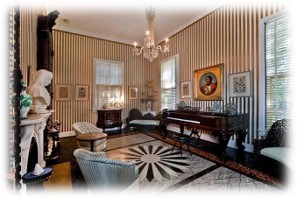 When entering the Bonnet House, I found myself amazed at how well taken care of the place is. From the paintings with gorgeous colors to the many vibrant fabrics throughout the house. In January of 1919, Frederic Clay Bartlett and Helen Louise Birch were married, and as a gift, Helen’s father gifted the land that is now known as the Bonnet House. The house and land were designed entirely by Frederic himself, who used his background in art and architecture to create a whimsical summer home. He took extra care when designing the Music Room, as it was believed to of been his wife’s favorite, as she enjoyed composing music and poems.
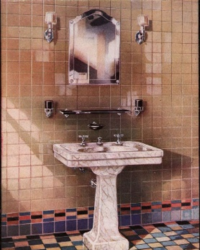 When I walked into the house, I was amazed at the thoroughness and artistic touch of the designs and decor. The joined half bathroom, as it is known today as a half bath, was a striking room, as it remains original to the 1920s. The walls in the room were hand-painted by Frederic and were made to look like a marble design. Having only a sink, toilet, medicine cabinet, and a window, the room is on the smaller scale. When Sofia and I were tasked with finding a similar 1920s-style bathroom, it became clear the task was not that simple. Most photos and drawings show that of a full bathroom, which includes a shower or tub, sink, and overall, more space throughout the room. The half bath in the house, which is a smaller space with only a toilet and sink, remains true to the design of the 1920s with only a few small alterations. Some of the things that were changed by Katie, Sofia, and myself as the curators, include the carpets, perfume, soap, towels, curtains, and the curtain rods.
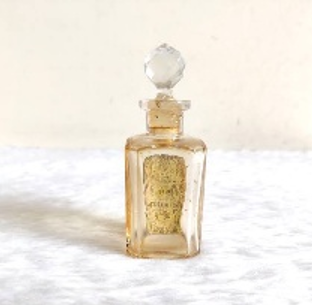
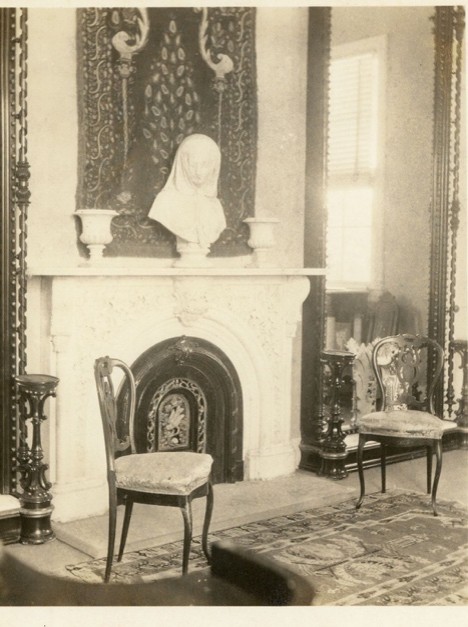
The first thing we did was we looked into what types of carpets or rugs would have been used in the 1920s. One thing found, even throughout the house, was the interest in Orientalism. Looking through our archives, I was shown an old photograph of the Music Room from a previous period, after Helen’s time, that appeared to have had a kind of Persian styled rug. This gave us the idea to look for a similar version for the room. As this bathroom is attached to the Music Room and adored by Helen, we opted for a more feminine appeal. Not wanting to alter the originality of the bathroom too much, we selected a simple glass, stoppered scent bottle that would have contained perfume at one time. Pulling the bottle here from the Bonnet House archives, it now sits on a small shelf in the bathroom along with a bar of soap.
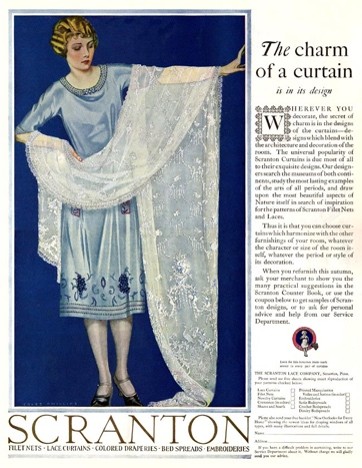
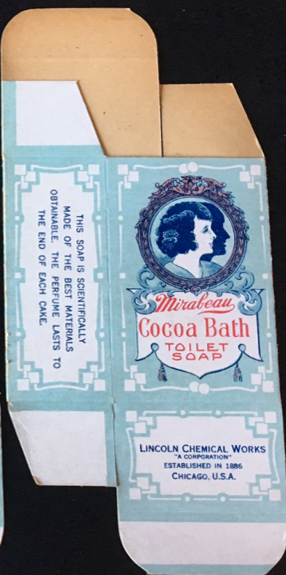
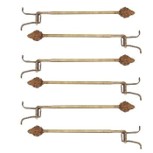
In Sofia’s research, she found that a common bar of soap was called Ivory. However, in our research to find a bar of Ivory soap, we could not seem to find one. In the end, we opted for a different brand that fit the desired era. Having the soap bar staged in the room gives the viewers and the room a sense of life, as though it was stuck in time. Furthering our research, we found that the archives had hand towels that are similar in material and texture to Damask. This was a popular material used in the 1920s for esteemed guests visiting the house. The final items that we looked into were the curtains and curtain rods. The existing curtains were held up by a metal pole and two nails, one on each side. Unfortunately, a generic curtain rod was unable to be used as the medicine cabinet was too close to the window. After some more research, we found that during the 1920s period, swinging arm curtain rods were very popular. We later found in the archives a set of three of these rods, selecting two to fit the room. Such curtain rods were used to swing open and closed, allowing the room to be lit by the Florida sunshine without having to move the curtains to the side. As for the curtains, the existing curtains were far too stained and needed to be replaced. We were able to find a thin lace option that makes the small bathroom airy and feminine. Having been a part of this redecoration process, I am very excited to see the completed product.
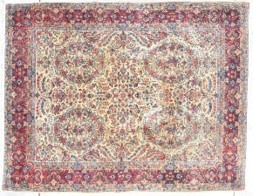
Oriental Kerman Persian rug from 1920s https://antiqueorientalrugs.com/2026/06/19/a-description-of-1920s-kerman-persian-rugs/?srsltid=AfmBOoofJrmG0buLAyytyUAyjHJi2shEXH6HgjR98-uyZ44mkuBJCH7o
Example of a 1920s glass perfume bottle that was found in our archives here at the Bonnet House. https://encrypted-tbn0.gstatic.com/images?q=tbn:ANd9GcQQSVKbX4MGm2hN_poLXyrsf0dJ-Dk_nlfen44f3J8B6w&s=10
Example of Swinging Arm Rods that were found here at the Bonnet House. https://www.thepreservationstation.com/product/other/miscellaneous/antique-curtain-rod-holders/
For more information:
https://rarehistoricalphotos.com/bathroom-designs-1920s/
https://archive.org/details/homespaceplannin0000temp/page/18/mode/2up
https://archive.org/details/housegardensbook0wrig/mode/2up
https://archive.org/details/beautifulhomesof00buil/mode/2up
https://archive.org/details/practicalbookoff00holliala/mode/2up
https://archive.org/details/homesinteriorsof0000unse/mode/2up
By Bonnet House Intern, Sofia Altamirano
 The curatorial team of the Bonnet House are proud to unveil the previously off view half bathroom in Helen Birch Bartlett’s preserved Music Room. Helen was Frederic Bartlett’s second wife with whom he designed the initial incarnation of Bonnet House. The sink, medicine cabinet, toilet, towel bars, crystal shelf, light fixture, toilet paper holder, window and faux marble walls, painted by Frederic, are the same as they were over 100 years ago. The rug, towels, curtains, curtain rods, soap box and perfume bottle however have been added by us on the curatorial team to stage the room in hopes of allowing guests to fully immerse themselves in the fascinating period the bathroom represents and imagine Helen’s time spent there.
When staging the space, we took into consideration both popular design trends of the era as well as Helen’s personal aesthetic, as can be seen in the original photos of the Music Room included here, unfortunately no photos or descriptions of the bathroom itself exist. In these original photographs, two large, ornate rugs made in the Persian tradition can be seen decorating the fireplace wall as well as the room’s floor. So, the dark red, floral patterned, Persian style rug that decorates the half-bathroom reflects both the Bartletts’ admiration for pan-Asian art and design and the wider interest in Eastern aesthetics among Chicago’s high society in the wake of the 1893 World’s Fair. The layered, white lace curtains align with advice from “The Practical Book of Interior Decoration” published in 1919; in which the authors advise homeowners to match their window treatments to the color of the windowsill and to use sheer, light weight fabrics in small rooms. The silver metal rods the curtains hang from date to the 1930s, however, their slender, geometric, wing tipped design follows the popular art deco trend of Helen’s time. Their ability to swing outward revealing the windowpane was also a popular function in the 1920s.
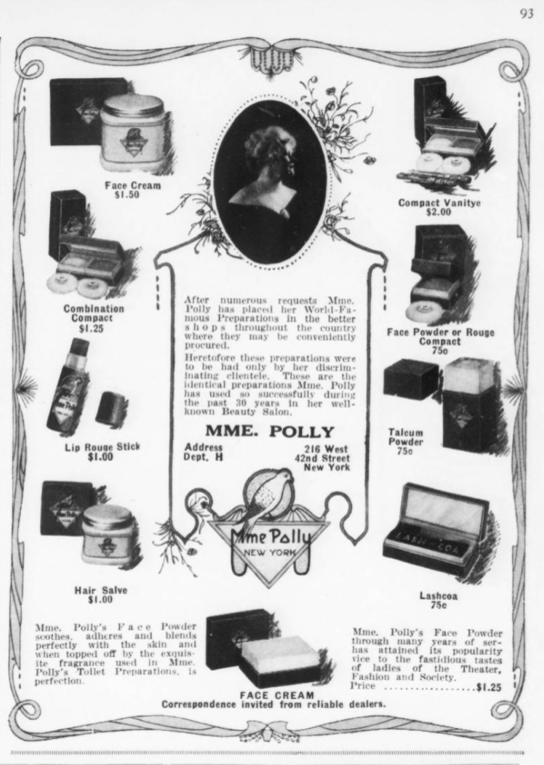
Along with these more standard objects we have included some distinctly feminine but no less practical pieces: a glass perfume bottle, white, embroidered hand towels and a replica box of a once popular hand soap, adorned with delicate swirls and a woman’s profile. These objects are representative of a significant cultural shift, of which Helen was a part, the emergence of the “New Woman.” Post WWI and the passing of the 19th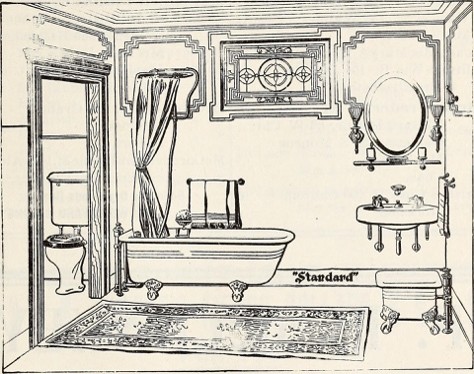 amendment women’s place in society changed dramatically. These historic events coupled with the stock market boom of the era granted women unprecedented spending power and independent public presence. To accompany these new rights and freedoms and actively oppose the modest and submissive femininity of the Victorian era, young women created new fashions: short, wavy hair that framed dramatic make up, looser, boxier silhouettes that showed off, for the first time, bare arms and legs and shiny, lacquered nails to pinch around smoldering cigarettes. Male marketers were quick to see this new consumer base and begin creating their own beauty ideal, imagining new problems to sell young women solutions in the form of their products, effectively capping the radicality of the emerging female-led styles.
With all these new products deemed necessary by magazine column writers and advertisements for any woman who wanted to be popular, new, longer beauty and hygiene routines emerged. With more time spent in the bathroom getting ready the once strictly utilitarian space evolved into a destination, necessitating attention to decoration not dissimilar to the bedroom. With the technology for bathrooms becoming widespread and the need for women to touch up their make up throughout the day, powder rooms or half bathrooms became popular. Here at Bonnet House, there are two half bathrooms, one in Helen’s Music Room and another in Frederic’s Studio. Given that Bonnet house during Helen’s time here was a rural retreat from city life her half bath would most likely have not served as a place to powder her nose but a convenience during long days spent playing the piano and possibly composing.
Bearing our research and Helen’s history in mind, we have staged her private half bathroom to communicate its dual nature as a product of convenience as well as an emblem of the new gendered hygiene paradigm that began during the home’s construction and continues today.